Showing posts with label pneumatic air line tubing. Show all posts

Friday, March 9, 2018

Pneumatic Air Line Tubing - Detail Process of Working

Pneumatic airline tubes have been ferrying important items around as well as between buildings since the mid 19thcentury. Even today these tubular systems are of great use in the medical industry. Many hospitals rely on them to transport medicine, documents and specimens around the building and turn from the lab in a matter of seconds. Between the walls of hospitals lies a network of pneumatic pipelines several kilometers in length. Specimens are first sealed in capsules before being given an air cushion ride to another part of the building. A computer allows the movement of the capsules to be monitored as compressed air whisks them through the tubing at up to 10 meters per second.
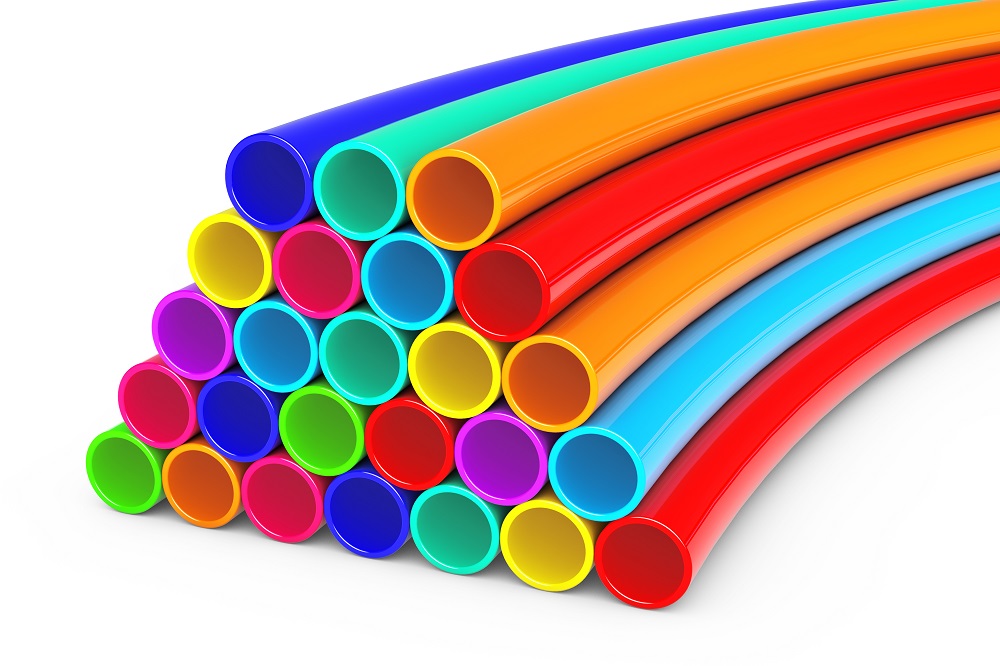
pneumatic-tubing
Pneumatic Tubing

Below is the Detailed Process of Manufacturing and Working of Pneumatic Air Line Tubing:

Production starts with the send and receives unit. Tubes are first glued to a plate both of which are made of plastic to reduce the build-up aesthetic. The tubes are then slotted through holes in the top of the units. A pair of tubes is now placed inside the housing. The tubes are slid back and forth to allow the system to switch between send and receive modes. The sliding mechanism is now screwed to the unit’s frame. The motor is then connected to a power source to confirm the motion of the plastic tubes. Horse is connected to the system to check that the seals and vents are intact.

At the next station, the unit’s door is temporarily removed whilst the motor power source. The wires are bundled together with plastic tongues which are then trimmed. The computerized control is now fitted to the door which can then be reattached before the default panel is wired up and tested. The computer in the send and receive unit is now connected to the wand in the dotty unit.

A test is performed to confirm that the two computers can communicate. There are numerous diverters in a pneumatic delivery system. These units allow the packages to turn or change direction within the network. A motor and gear are installed and the movements light from one outlet to the next are tested. If all is in order, then the back panel is screwed on.

The diverter and other transfer units are then connected to tubing that runs through the walls of the hospital. To make the delivery capsules, a plastic body is placed in a fixture, the lidded camp is now added. The spinning motion also generates heat that fuses the cap to the body. The capsule is slid onto a post thus prevent it from rolling around as the lid is connected to the unit with the spring. Then sliding lid is screwed to the framework.

A rubber casting is added before a rubber gasket is stretched around the rim. Fabric band wraps around both the ends to help cushion and capsule. During its journey through the pipeline, the buns are neatly tucked in. plastic bumpers are also installed inside the capsule. These will help to protect the contents from any knocks and jolts during the ride.

This medical capsule is now ready for a test run. Once inside the chute, its journey nut can be probed. The door is opened to reveal the operation. Put the tube slide over to collect the capsule and then slide back to drop it into the main pipe and as compressed air blows through the system gone with the wind.

There are various manufacturing companies for pneumatic air line tubing used for the transportation of medicine and documents through the hospital and installed in the walls of the hospital.  Thus, pneumatic air line tubing system is the one on which the hospitals totally rely for their safe transportation.     

Thursday, September 14, 2017

Reasons to Employ Pneumatic Air Line Tubing System

Automation in industrial applications and other components has largely been the method applied in original equipment manufacturing industries and mechanical factories. Making use of these standard components which are widely available in the market today like controllers, grippers, sensors and air motors not only help in the efficiency of scale but also help in modernizing the work places. Pneumatic technologies offer many advantages such as cost reductions in the various stages of production and time reduction by saving time for each piece of work conducted and reduction of manual and human errors in the process of manufacturing.Many a time money is lost during the production process through the leakage of idle time of employed personnel.

Make use of all that’s Available 

Idle hands are the waste of hands, in a sense, if an operator is waiting for work to come his way by watching the process, then it is best to find a method and way to automate that piece of work or process. Allowing an operator to run more than one machine at a time, automation of equipment is a great way to conduct business and mass production. Most automation would require employing pneumatic mechanisms. This leads to the services of pneumatic air system and pneumatic air line tubing system. 

The initial costs to build such a system are lower than other automation in comparison to hydraulic systems. The pneumatic air line tubing system is generally simple in design and is made of aluminum pipes and other components to interlock and connect. Pneumatics relate to an interconnected group of automation mechanisms which use compressed air as a power source. Each component here can contribute to increasing the rate of production.

air-line-tube
Air Line Tube
  • Fittings on an Air Line Tubing - which is a consistent part of a piping system that may be used to connecting sections of the pipe together such as elbows, bends, tees or a coupling. It is very critical that the equipment is in optimal working conditions since the fittings maintain a regular flow of air under sustained pressure to guarantee that the tool’s performance is never compromised. 
  • Materials Used for Fitting Components - Nylon and plastic components may also be used as per the requirements in the project. Projects for indoor applications may use plastic, nickel plated brass, and glass reinforced with nylon is also a frequently requested fitting that is used. Brass fittings are mostly in demand where there is a need to connect and disconnect the assembly of the tubing. 

Note – When employing brass fittings in pneumatic air line tubing system consider the edges and sharp projections from the fittings entering the hose. If the fittings are manufactured over specialized machinery that employs precision tools, this error can be avoided to a large extent and lengthen the life of the tubing. 

Advantages of this System 

  • There is no special tool or clamp that needs to be provided to complete the installation project.
  • The process of planning and installing is not a time-consuming affair, the work can be completed in a few minutes.
  • All fittings that are used in the installation can be easily swapped and replaced. There is no requirement for distinct tools to replace or repair.
  • The power source is compressed air and this is a reusable source which is available freely and abundantly.
  • The nut can hold a hose steadily and toil under high temperatures and high-pressure situations. These fittings show great integrity.

Applications – There is a wide range of applications for these systems, some rare and interesting places of applications are in postal service, the London pneumatic dispatch company used this for several large cities. Banks, hospitals and supermarkets use these systems to dispatch receipts and cash to central accounting offices.